How to Use an Insulin Syringe for Peptides
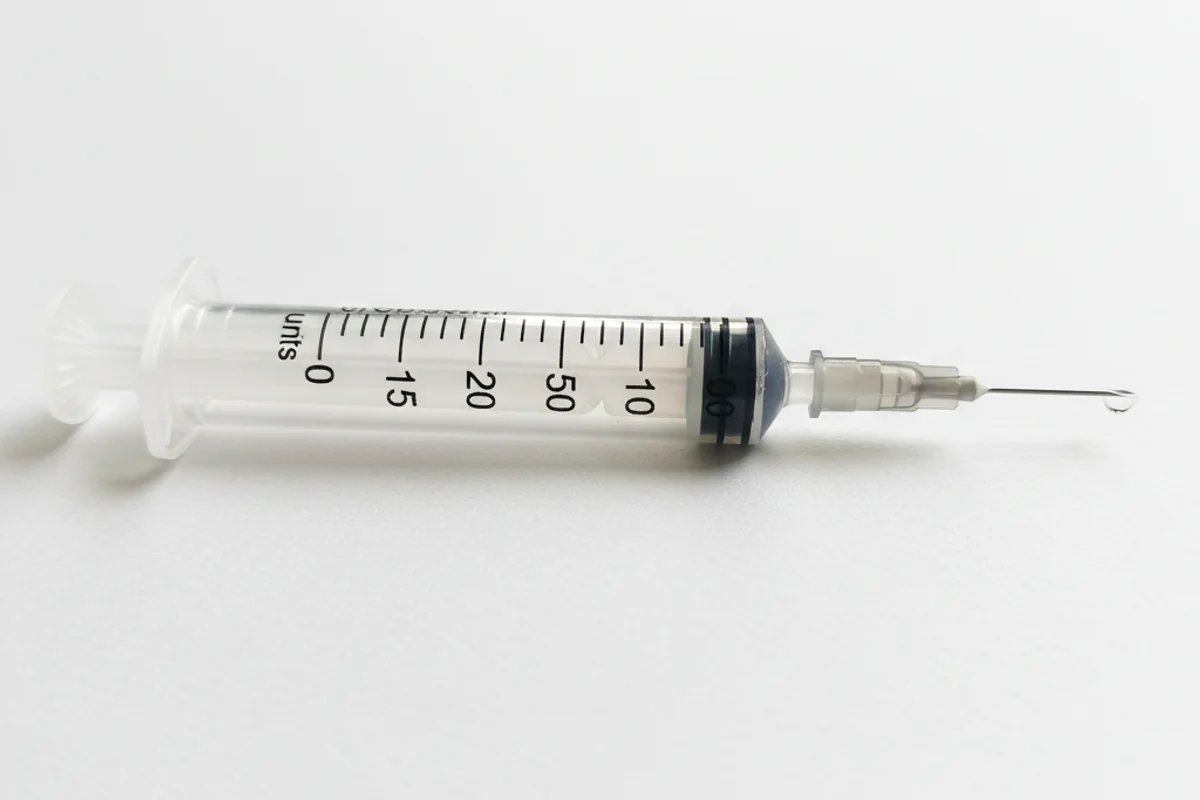
Why Insulin Syringes for Peptides?
Insulin syringes are the standard tool for peptide injections for several reasons. They come with permanently attached fine-gauge needles (29-31 gauge) that minimize injection pain. They have precise volumetric markings suitable for the small volumes typical of peptide doses. They are designed for subcutaneous injection, which is the primary route for most peptides. They are affordable, widely available, and disposable.
Understanding U-100 Syringe Markings
All standard insulin syringes in the United States are U-100, meaning 100 units equals 1 mL. This is the key conversion: 100 units = 1 mL = 1 cc. The Peptide Calculator Plus uses this conversion to show your dose in both mL and syringe units.
1 mL Syringe (100 units)
- Numbered marks at: 10, 20, 30, 40, 50, 60, 70, 80, 90, 100
- Each small tick mark = 2 units
- Best for: Doses 30-100 units (0.3-1.0 mL)
- Less precise for small doses due to wider tick spacing
0.5 mL Syringe (50 units)
- Numbered marks at: 5, 10, 15, 20, 25, 30, 35, 40, 45, 50
- Each small tick mark = 1 unit
- Best for: Doses 10-50 units (0.1-0.5 mL)
- Good balance of precision and volume capacity
0.3 mL Syringe (30 units)
- Numbered marks at: 5, 10, 15, 20, 25, 30
- Each small tick mark = 0.5 units
- Best for: Very small doses under 15 units (under 0.15 mL)
- Maximum precision for microgram-range peptides
How to Read the Syringe Correctly
When drawing liquid into an insulin syringe, look at the flat bottom edge of the plunger rubber tip (the black or grey rubber piece inside the barrel). Align this bottom edge with the desired unit mark. Do not read from the top of the rubber tip or the top of the dome formed by surface tension.
Hold the syringe at eye level and look straight on, not from above or below. Parallax error (looking at an angle) can cause you to misread by 1-2 units.
Step-by-Step: Drawing a Peptide Dose
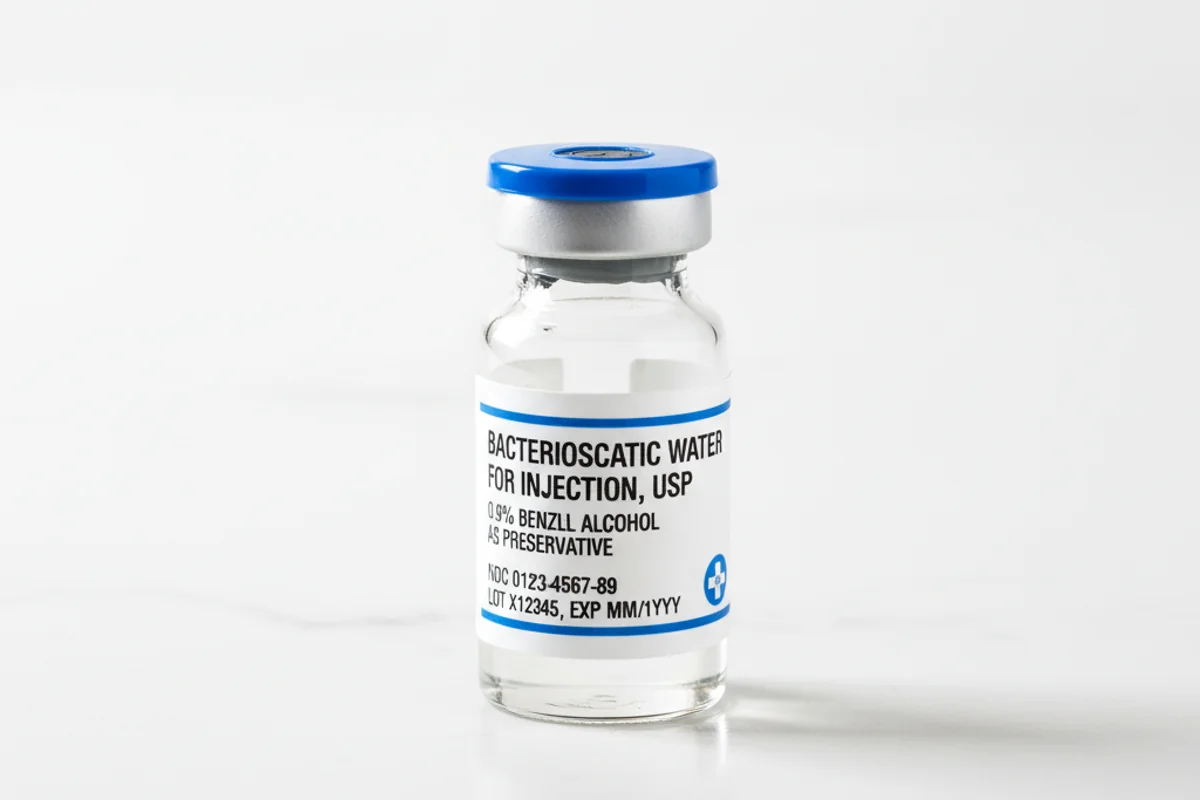
- Swab the vial stopper with an alcohol pad and let it dry.
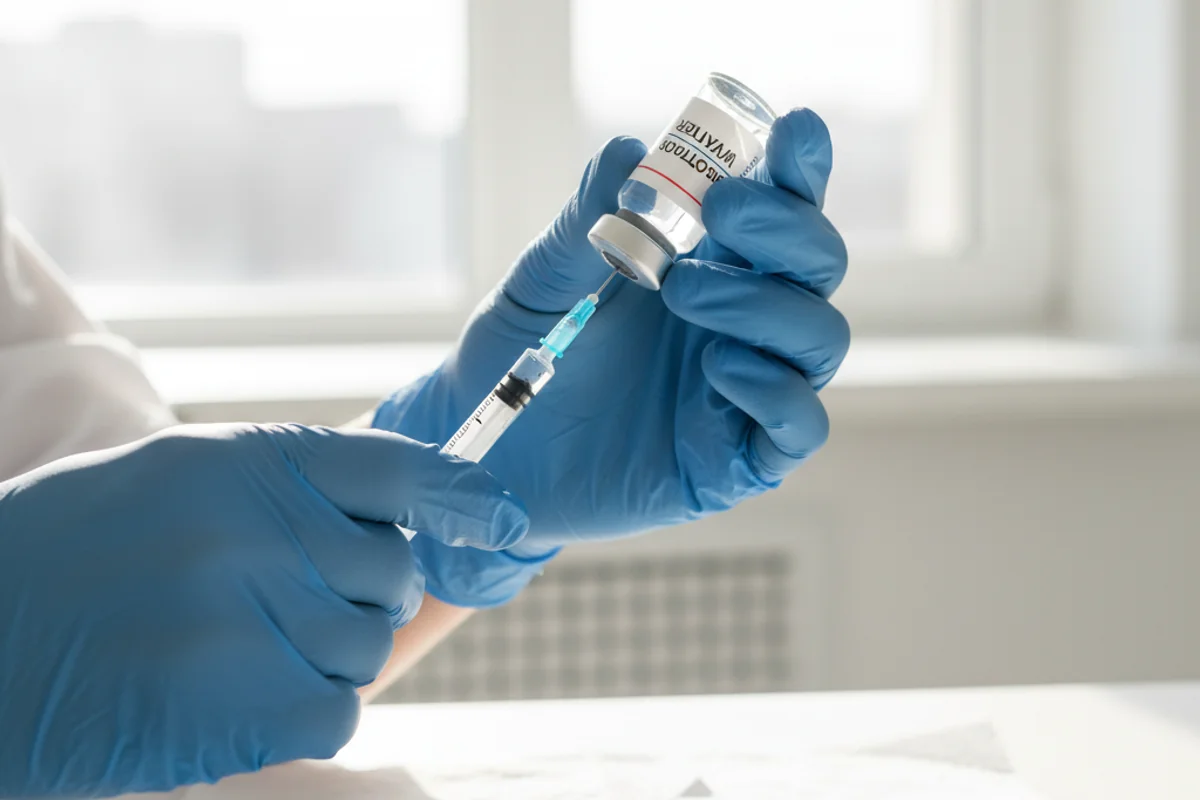
- Remove the syringe cap and pull back the plunger to draw in air equal to the amount of liquid you plan to draw (this prevents a vacuum in the vial).
- Insert the needle through the vial stopper and push the air in.
- Invert the vial so the needle tip is submerged in liquid.
- Slowly pull back the plunger past your target mark.
- Check for air bubbles. If present, flick the barrel gently to move them to the top, then push the plunger until the bubbles are expelled and the correct volume remains.
- Remove the syringe from the vial.
- The syringe is now ready for injection.
Choosing the Right Needle Gauge
Insulin syringes come with fixed needles in several gauges:
- 29 gauge -- Most common, good balance of flow rate and comfort
- 30 gauge -- Thinner, slightly more comfortable but slower draw
- 31 gauge -- Thinnest, least painful but slowest to draw and inject
For most peptide injections, any of these gauges work well. Thicker (more viscous) peptide solutions may flow better through 29 gauge needles.
Needle Length for Subcutaneous Injection
Insulin syringes come in several needle lengths. For subcutaneous peptide injection, shorter needles (5/16 inch or 8mm) are ideal for most body types. They reach subcutaneous tissue without penetrating muscle. For very lean individuals, even the shortest available needle may need to be inserted at a 45-degree angle rather than perpendicular to avoid intramuscular injection.
Pro Tips for Accurate Dosing
- Always use a fresh syringe for each injection
- Practice drawing water before using expensive peptides
- If your dose is very small (under 5 units), consider using more water for reconstitution to increase the volume per dose
- Store used syringes in a sharps container, never in regular trash
- The Peptide Calculator Plus shows a visual syringe indicator matching your dose
Calculate Your Dose with Peptide Calculator Plus
Use the free peptide calculator to find exact syringe units, reconstitution volumes, and doses per vial.
Open Bpc 157 Calculator