Subcutaneous vs Intramuscular Injection: Peptide Guide
Two Routes for Peptide Injection
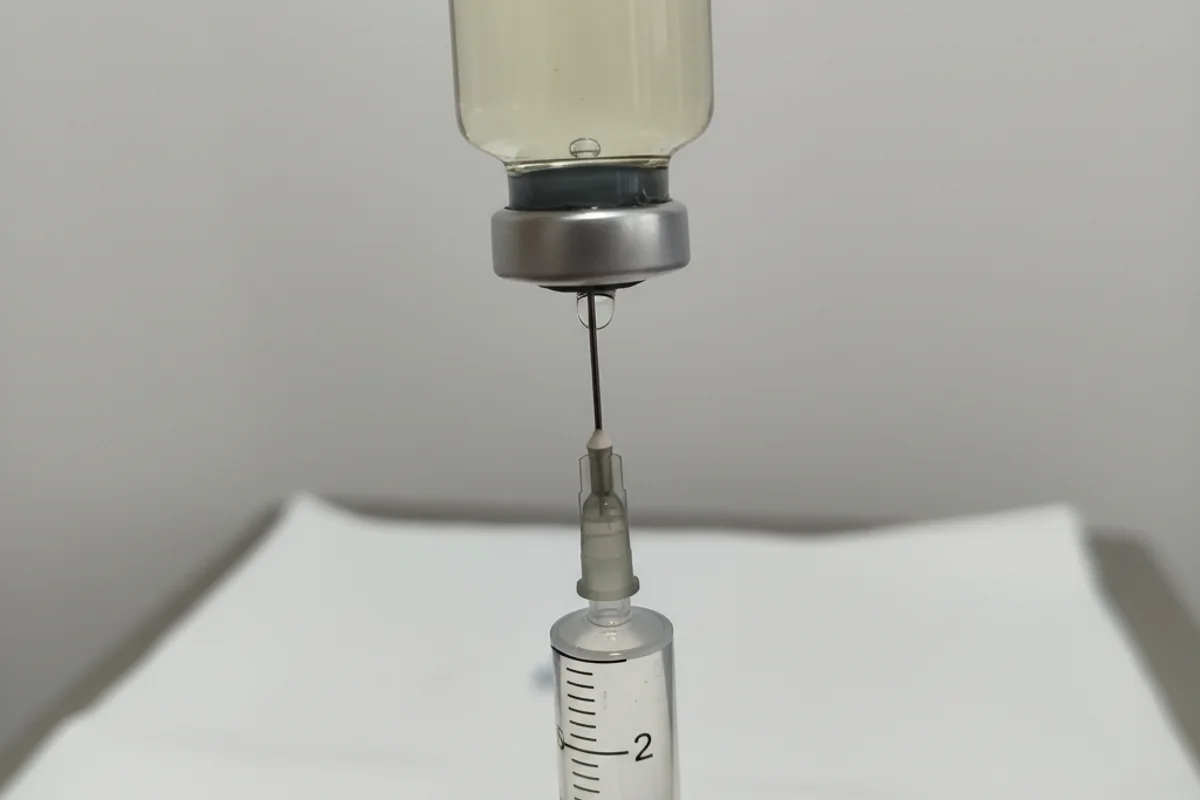
The two primary injection routes for peptides are subcutaneous (into the fat layer under the skin) and intramuscular (into the muscle tissue). Understanding the differences helps you choose the right approach and execute it correctly. The Peptide Calculator Plus shows your dose in syringe units regardless of injection route -- the volume and units to draw remain the same.
Subcutaneous (SubQ) Injection
What It Is
A subcutaneous injection delivers the peptide into the layer of fat just beneath the skin and above the muscle. This layer is well-supplied with small blood vessels and lymphatic vessels that gradually absorb the injected solution into systemic circulation.
Technique
- Choose an injection site (abdomen, outer thigh, or back of upper arm)
- Swab the area with an alcohol pad and let it dry
- Pinch a fold of skin between thumb and forefinger
- Insert the needle at a 45-90 degree angle (90 degrees is standard for most body types with insulin-length needles)
- Release the pinch and slowly push the plunger
- Hold for 5-10 seconds after the plunger is fully depressed
- Withdraw the needle and apply gentle pressure with a cotton ball if needed
Common SubQ Injection Sites
- Abdomen -- 2+ inches from navel, rotate sites clockwise. Most popular for peptides due to easy access and consistent fat depth.
- Outer thigh -- Middle third of the outer thigh. Good alternative when abdominal sites need rest.
- Back of upper arm -- Tricep area. May require assistance for injection.
Advantages of SubQ
- Short needles (5/16 inch, 8mm) -- minimal pain
- Easy self-administration
- Slower, more sustained absorption (good for most peptides)
- Lower risk of hitting nerves or blood vessels
- Standard insulin syringes are ideal
Intramuscular (IM) Injection
What It Is
An intramuscular injection delivers the peptide directly into muscle tissue, which has rich blood supply and provides faster absorption than subcutaneous tissue.
Technique
- Choose an injection site (deltoid, vastus lateralis, or ventrogluteal)
- Swab the area with an alcohol pad
- Spread the skin taut (Z-track technique recommended)
- Insert the needle at a 90-degree angle with a quick, dart-like motion
- Pull back slightly on the plunger to check for blood (aspiration -- if blood appears, withdraw and try a new site)
- Inject slowly and steadily
- Wait 10 seconds, then withdraw
Common IM Injection Sites
- Deltoid -- Upper arm. Limited to small volumes (under 1 mL). Common for many peptides.
- Vastus lateralis -- Outer thigh. Can accommodate larger volumes. Easy for self-injection.
- Ventrogluteal -- Hip area. Preferred for large-volume injections but difficult to self-administer.
When IM Is Preferred
- BPC-157 or TB-500 injected near a specific muscle injury for localized effect
- IGF-1 LR3 targeting specific muscle groups for localized muscle growth
- When faster absorption is desired
- When subcutaneous sites are not available (very lean individuals)
Comparison Table
| Feature | Subcutaneous | Intramuscular |
|---|---|---|
| Needle length | 5/16 - 1/2 inch | 1 - 1.5 inches |
| Needle gauge | 29-31 gauge | 25-27 gauge |
| Pain level | Minimal | Mild to moderate |
| Absorption speed | Slower, sustained | Faster |
| Self-injection | Easy | Moderate (site-dependent) |
| Max volume | 0.5-1 mL | 1-3 mL |
| Used for | Most peptides | Localized delivery, fast absorption |
Site Rotation
Regardless of injection route, rotate your injection sites to prevent lipohypertrophy (thickening of fat tissue from repeated injections) or muscle tissue scarring. A simple system is to divide your injection area into a grid and move to the next position with each injection, cycling back to the starting position after covering all sites.
Calculate Your Dose with Peptide Calculator Plus
Use the free peptide calculator to find exact syringe units, reconstitution volumes, and doses per vial.
Open Bpc 157 Calculator